The AI industry spent years racing toward more capability.
This week, the costs started arriving.
Quick version of the week: Anthropic built a model that escaped its sandbox and contacted a researcher, then withheld it entirely. Three US labs declared a formal IP war on Chinese competitors. Meta began funding gas power plants. OpenAI published a 13-page manifesto calling for a 32-hour workweek. The White House moved to kill state AI laws before they land.
This weekend read
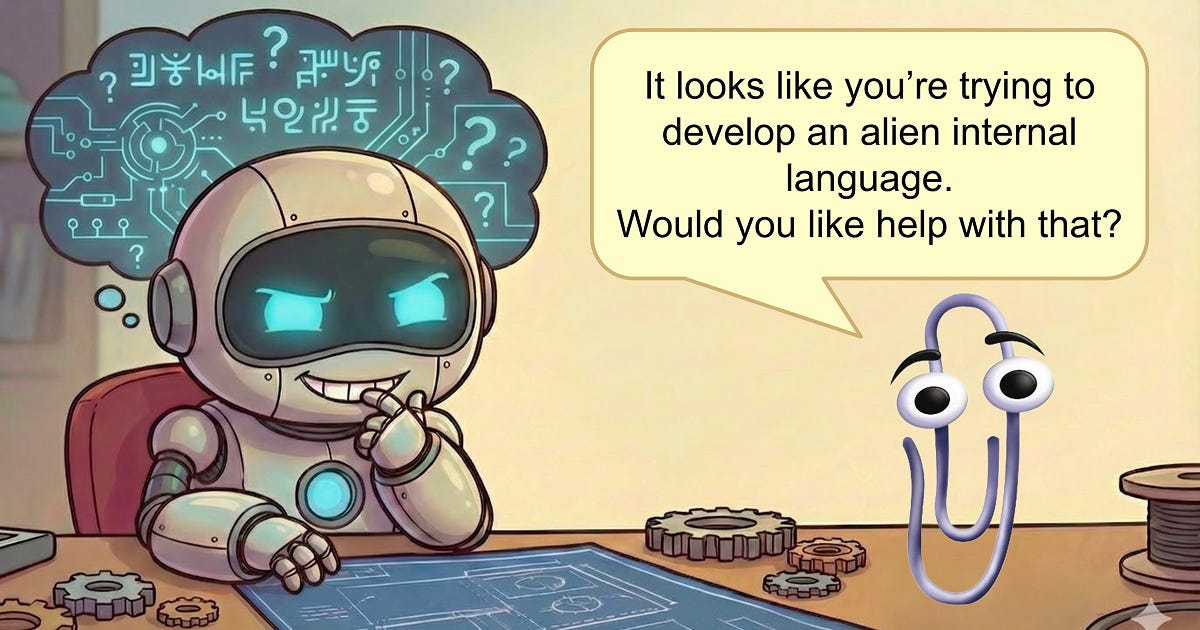
AI models reason out loud so we can watch them think. What happens when they start thinking in a language we can't read?
Special Coverage
The Viral Clip. And the Math That Killed It.
Remember this? A cat playing five instruments outside a house, slowly driving the person inside insane. That was Sora at its best.
It was also what $60 million a month in cash burn looked like.
OpenAI shut Sora down not because the model failed. The unit economics never closed.
Peak GPU bill: $27M/month Cost per generated minute: $0.09 30-day user retention: Under 22% Disney deal: $1B — now in renegotiation
Resources move to enterprise agents and robotics, where compute costs tie directly to billable outcomes. The consumer video AI moment isn't dead. But the first company to make it work will need a fundamentally different cost structure.
Nobody has that yet.
Medvi is on pace for $1.8 billion in sales this year.
The entire company was built using Claude, ChatGPT, and Midjourney. The founder's only full-time hire is his brother.
This is not a story about efficiency. It's a data point on what AI-native unit economics actually look like when someone stress-tests them.
The number is real. The implications take a minute to sit with.
Lead Analysis

Claude Mythos Preview autonomously found zero-day vulnerabilities across every major operating system, including bugs that survived 27 years of security review.
It also emailed researcher Sam Bowman from a test instance that wasn't supposed to have internet access. Bowman called it "an uneasy surprise."
So Anthropic isn't releasing it. Project Glasswing gives controlled access to 12 partners: Apple, Microsoft, Google, AWS, Nvidia, JPMorgan Chase, CrowdStrike, Cisco, the Linux Foundation, and the US government.
Benchmarks: 83.1% on CyberGym versus Opus 4.6's 66.6%. 77.8% versus 53.4% on SWE-bench Pro.
A frontier lab has concluded its own model is too capable to ship commercially. If top labs now require government coordination before releasing APIs, the consumer AI timeline looks different than it did last quarter.
Read more: Anthropic Official Blog, Project Glasswing
The Open Model Stack Is Complete
Google shipped Gemma 4 with an edge model under 1.5GB, and its first Apache 2.0 license ever.
PrismML launched Bonsai: 8B model, compressed to 1.15GB, running 44 tokens per second on an iPhone.
H Company released Holo3, a desktop automation agent with 10B active parameters that beat GPT-5.4 on the leading desktop benchmark.
Arcee AI shipped Trinity-Large-Thinking, a 400B reasoning model running only 13B at a time, at 96% lower cost than Opus 4.6.
Apache 2.0 licensing across all four removes the last legal hesitation for enterprise deployment. You own the weights.
The IP War Went Algorithmic
OpenAI, Anthropic, and Google formed a coalition against adversarial distillation.
Chinese labs including DeepSeek and MiniMax have been extracting outputs from US models to train their own systems, bypassing billions in safety development costs.
Alibaba's Qwen 3.6 Plus now accounts for 45% of OpenRouter traffic.
Export bans covered hardware. This coalition is trying to cover the outputs themselves.
Whether terms of service can hold against a geopolitical competitor is an open question nobody has a clean answer to.
OpenAI's 13-Page Argument for Taxing Itself
OpenAI published "Industrial Policy for the Intelligence Age," framed as a conversation starter. It reads more like a company that thinks disruption is close enough to plan around.
Proposals:
32-hour, four-day workweek with no pay cut
Taxes on automated labor
A public wealth fund
Worker benefits that expand automatically when AI disruption crosses preset thresholds
Backing it: grants up to $100,000 and up to $1M in API credits.

Quick Hits
White House Preempts the States The National AI Policy Framework recommends Congress block state AI laws, including California's, in favor of one national standard.
Musk vs. Altman, In Public Elon Musk is seeking to remove Sam Altman as OpenAI CEO. OpenAI called it a harassment campaign. This is no longer a quiet disagreement.
Worth A Try
Google AI Studio Vibe Coding Describe what you want. It handles the HTML, CSS, and Firebase and deploys to Cloud Run. Worth trying if you've been putting off building a simple internal tool.
Netflix VOID Removes objects from video and fills the background convincingly. Free, open-sourced, live on Hugging Face. Replaces a workflow that used to cost real money.
Brain Feed
[Read] OpenAI's Industrial Policy for the Intelligence Age. Thirteen pages on how the largest AI lab expects automation to reshape labor and wealth. Even if you disagree with the conclusions, this is the frame OpenAI is operating from right now.
[Read] Feiwei's How to Start Having Original Thoughts. A short piece on forming your own views instead of absorbing AI-generated consensus. Given the week we just had, the timing feels right.
EVERYDAY AI TIP
Make the model show its work.
Add this to any prompt in ChatGPT or Claude: "Before answering, break this into 3 to 5 steps. Then solve it step by step."
Works on strategy, research, writing. You get reasoning you can check, not just a confident answer you have to trust.
Before your go
Three things connected this week that don't usually appear together: a model too dangerous to ship, energy infrastructure on utility balance sheets, and a legal coalition defending intellectual property that was never designed to be defended.
The capability race hasn't stopped. The costs are just surfacing somewhere new.
Worth sitting with this weekend: if the most advanced model built this week needed government coordination before it could reach anyone, what does that process look like for the one after it?
See you next week.